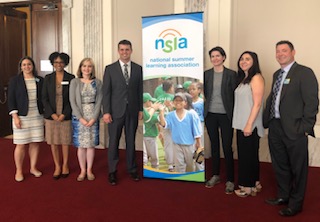
On September 19, 2019, the National Summer Learning Association (NSLA) and partners held a Capitol Hill briefing on the topic Summer Starts in September! How targeted federal investments help partners plan successful summer activities for youth. Speakers from Baltimore City Public Schools, the Alexandria, Virginia Library, and Teachers in the Parks program in Reading, Pennsylvania discussed how key federal investments support numerous summer opportunities for youth at the local level. These programs operate innovative summer literacy and learning programs using a diverse mix of district, state, federal, and private funding to help promote literacy and prevent summer learning loss.
A key component of all programs is the use of the Summer Food Service Program (SFSP), which provides regular, healthy meals to students who qualify for free and reduced meals during the school year. Yet, a common thread among all the speakers was that available public, and especially federal targeted funds, are not nearly enough to serve all students in need. The largest programs represented here serve only 10-12 percent of the youth population in a community, leaving many working families in need of affordable, safe and enriching activities for their children during the months when school is not in session.
 Congressman Joseph Morelle (NY-25), lead sponsor of the Summer Meals and Learning Act (S. 2070 and H.R. 3667), shared his perspective on the importance of summer activities for youth. This included how the Rochester, NY community has created and grown a network of school, community-based and local agency providers that coordinate services to ensure as many children as possible are able to have an enriching and fun summer. He shared memories of spending summers at the library, reading just about every book available. Congressman Morelle reiterated the importance of investments in summer to help close opportunity and achievement gaps.
Lara Ohanian, Director of Differentiated Learning at Baltimore City Public Schools (BCPS), shared the myriad summer programs offered by BCPS, many in partnership with community organizations like Young Audiences and Springboard Collaborative. With a high population of students eligible for free and reduced meals, BCPS incorporates SFSP into every site. These programs target specific needs and interests of various ages and groups of children, including programs that engage students in engineering, debate, intensive English-language acquisition, and AP classes. Like most schools and districts, BCPS weaves together a variety of public and private funding streams to deliver these programs and services.
Diana Price, Youth Services Manager at the Alexandria Library in Alexandria, VA, highlighted the importance of free and easily accessible summer programs in addressing the tremendous opportunity gaps in a highly diverse community. Partners like the Alexandria Recreation Department and Alexandria City Public Schools expand the reach of library programs to more youth, and help educate families about the variety of reading and learning programs offered at the library.
Finally, Matthew Hathaway, fourth grade teacher and founder and director of Teachers in the Parks (TIP) in Reading, PA, emphasized the importance of bringing programs to where kids are and want to be in the summertime. Yet, just because a program is held outside the classroom, it doesn’t mean it’s not rigorous: TIPS brings classroom teachers and a set of literacy materials to small groups in the park setting where kids can explore and discuss reading material on a wide variety of topics. The park setting seamlessly links the academic morning to the SFSP and park recreation programs for the afternoon, creating a full day of programming that feels like camp for kids.
 Together with these diverse programs, NSLA shared information for Summer Learning Advocates to get involved in the fight for critical funding at the federal level that supports summer learning and enrichment opportunities. The briefing was sponsored by Senator Jeff Merkley (OR), sponsor of the Summer Meals and Learning Act (S. 2070 and H.R. 3667), which would support new partnerships between libraries and schools for summer literacy programming in targeted schools.
Additionally, panelists reiterated the importance of the 21st Century Community Learning Centers program and other ESSA funding that funds out-of-school time supports and wraparounds services for youth most at-risk. Help us ensure that all students have the opportunity to be safe, healthy, and productively engaged during the summer months! Contact Congress about key federal funding that supports summer. https://www.summerlearning.org/contact-congress/
As Vice President for Policy and Research, Rachel Gwaltney leads NSLA’s efforts to improve federal and state policy conditions for summer activities; and to develop, steward, and share research related to summer opportunities.